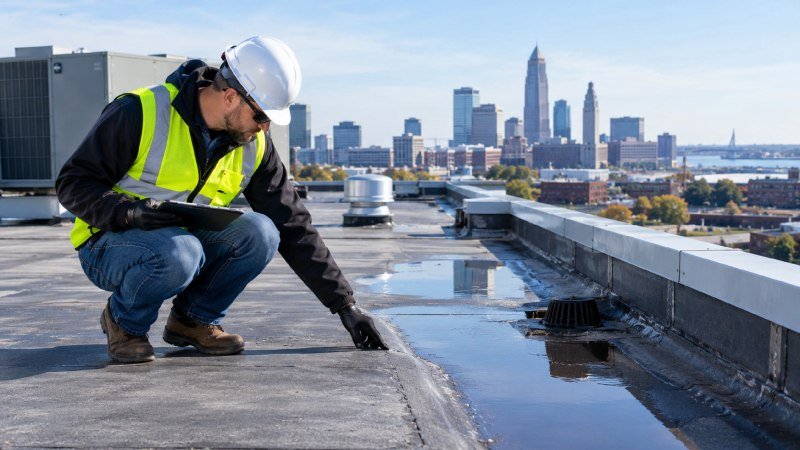
For property managers, a roof is easy to forget when everything looks fine from the ground. However, Commercial Roof Maintenance plays a major role in protecting a building, its tenants, and the owner’s budget. A smart property manager knows that small roof issues can become expensive problems when nobody checks them. That is why scheduling routine maintenance inspections should be part of every building care plan. With regular Commercial Roof managers can find leaks, damaged flashing, blocked drains, and weak membrane areas before they cause bigger trouble. This simple approach also makes Commercial Roof Maintenance easier to plan because repairs can happen before an emergency. In Northeast Ohio, where snow, ice, wind, and heavy rain can put extra stress on a roof, regular Maintenance becomes even more important. A clear Commercial Roof Maintenance routine helps teams stay organized, protect the property, and control long-term costs.
Why Roof Maintenance Matters for Property Managers
Property managers have many jobs to handle each day. They may look after tenants, building systems, safety, cleaning, and repairs. Because of this, the roof can sometimes receive attention only after a leak appears.
That approach can create bigger problems.
A roof does not always fail suddenly. Instead, small issues often develop slowly. A loose flashing edge, blocked drain, damaged membrane, or small opening around a roof penetration may allow water to enter. At first, the problem may seem minor. Later, it can affect insulation, ceilings, walls, equipment, and other parts of the building.
Regular maintenance helps managers stay ahead of these issues.
Northeast Ohio Weather Can Be Hard on Commercial Roofs
Northeast Ohio buildings face changing weather throughout the year. Heavy rain can test drainage systems, while snow and ice can add weight and moisture to the roof.
Strong winds can also move or damage roof materials. Freeze-thaw cycles create another challenge. Water can enter small openings, freeze, expand, and make those openings larger.
Therefore, property managers should not wait for visible damage.
A regular inspection gives them a chance to find early warning signs and arrange repairs at a convenient time.
Build a Commercial Roof Inspection Schedule
A commercial roof inspection schedule gives property managers a simple way to stay organized. Instead of checking the roof only when someone reports a leak, managers can plan inspections before problems become serious.
A biannual inspection is a useful starting point for many commercial properties. Managers can also schedule extra checks after major storms, heavy snowfall, strong winds, or other severe weather.
During each inspection, the roofing team can look at:
- Roof membrane condition
- Flashing and seams
- Roof drains and gutters
- Drainage paths
- Roof penetrations
- Ponding water
- Signs of leaks
- Damaged insulation
- Loose or missing materials
- Areas showing roof aging
These checks create a clearer picture of the roof’s current condition.
Preventative Roof Maintenance Saves Time
Preventative roof maintenance focuses on fixing small problems before they become major repairs.
For example, a small flashing issue may be easier to repair than widespread water damage. Likewise, clearing a blocked drain can help prevent standing water from creating additional stress on the roofing system.
This approach also gives property managers better control over their schedules. Emergency work can interrupt tenants, employees, customers, and daily business operations.
By dealing with smaller issues early, managers can reduce unexpected disruptions.
A Property Manager Roofing Checklist Makes Work Easier
A property manager roofing checklist can help teams remember important inspection points. It does not need to be complicated.
A basic checklist may include:
- Check the roof surface.
- Look for damaged membrane areas.
- Inspect flashing around edges and penetrations.
- Check drains for blockage.
- Look for ponding water.
- Check for visible signs of water entry.
- Review previous repair areas.
- Record new concerns.
- Take photos when needed.
- Schedule repairs based on urgency.
This simple system helps property managers keep useful records. Those records can also help when planning future budgets.
Roof Aging Should Never Be Ignored
Every commercial roofing system ages over time. Sunlight, rain, snow, wind, foot traffic, temperature changes, and previous repairs can all affect its condition.
Roof aging does not always mean immediate replacement. Instead, it means the property manager should pay closer attention to changes in the system.
An older roof may need more frequent inspections. The roofing team can identify areas that require repair, maintenance, or further evaluation.
That information allows the owner and manager to make decisions based on the roof’s actual condition rather than waiting for a major failure.
Small Repairs Can Prevent Bigger Problems
One of the main goals of Commercial Roof Maintenance is small repair prevention. A small issue can often be handled before it affects a larger section of the building.
For example, damaged flashing can allow water into the roofing assembly. A weak seam can create a path for moisture. A blocked drain can leave water sitting on the roof.
These problems may look different, but they share one common point: early attention can help limit the damage.
Property managers should report unusual stains, musty areas, ceiling damage, or repeated water problems. Even if the roof looks normal from outside, these signs deserve attention.
Create a Clear Roof Maintenance Plan
A roof maintenance plan gives property managers a long-term system for caring for the building.
A good plan should include inspection dates, previous repairs, roof age, known problem areas, and recommended follow–up work. It should also explain who will handle inspections and how urgent problems will be reported.
The plan can change as the roof gets older.
For example, a newer roof may require routine inspections and basic upkeep. An aging roof may need closer monitoring and more detailed planning.
This organized approach makes roof care easier for everyone involved.
Maintenance Can Reduce Ownership Costs
Roof repairs are only one part of the total cost of owning a commercial property. Water damage can affect other building components as well.
A leak may damage insulation, drywall, ceilings, flooring, electrical areas, stored materials, or equipment. It may also interrupt normal business activities.
Because of this, ownership cost reduction is an important reason to maintain the roof.
Regular inspections do not guarantee that every roof problem will be avoided. However, they can help property managers identify developing issues earlier and make repair decisions before the problem spreads.
Do Not Wait for an Emergency
Emergency commercial roofing problems often happen at inconvenient times. A serious leak during a storm can affect tenants and business operations immediately.
That is why routine inspections matter.
A property manager who keeps records and follows a maintenance plan can respond more quickly when something changes. The team already has information about the roof, previous repairs, and areas that may need attention.
This makes the response more organized.
Protect Tenants and Building Operations
A commercial roof protects much more than the building itself. It also helps protect the people and businesses inside it.
Water entering a commercial property can disrupt offices, retail spaces, warehouses, and other facilities. In some cases, managers may need to move people or equipment away from affected areas.
Regular Commercial Roof Maintenance helps property managers take a proactive approach. Instead of reacting only after damage appears inside the building, they can monitor the roof and address concerns earlier.
Work With a Qualified Roofing Professional
Property managers do not need to inspect every roofing detail themselves. A qualified commercial roofing professional can examine areas that may be difficult to see from ground level.
Professional inspections can also provide written findings, photos, repair recommendations, and information about the roof’s current condition.
This information can help managers explain roofing needs to property owners and plan future work.
Final Thoughts
A commercial roof may stay out of sight, but it should never stay out of mind. Northeast Ohio weather can place repeated stress on commercial roofing systems, making regular inspections and planned care especially useful.
With a roof maintenance plan, a practical commercial roof inspection schedule, and timely repairs, property managers can reduce surprises and protect their buildings. They can also track roof aging, prevent small problems from becoming larger ones, and work toward long-term ownership cost reduction.
Most importantly, regular care turns roof management from an emergency response into a planned part of property ownership.