
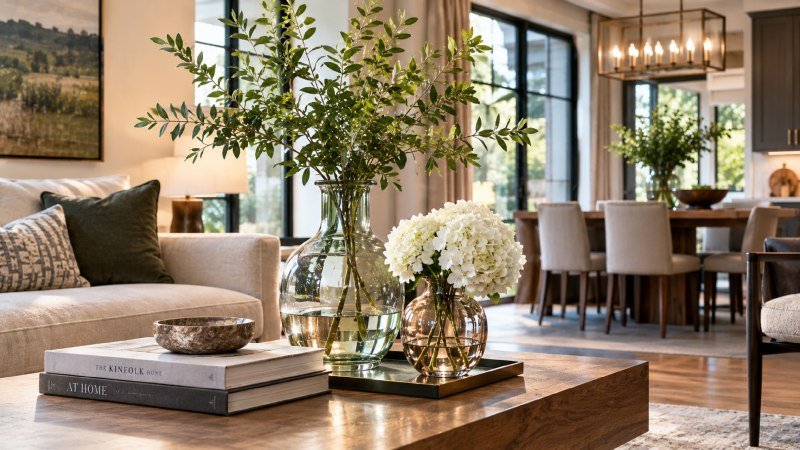
A well-designed room is shaped by more than walls, doors, and fixed finishes. Furniture, lighting, and small decorative pieces influence how architecture is read and how comfortable a space feels. Glass vases add height, reflection, and a controlled point of colour without making a room crowded. In homes, hospitality spaces, and retail interiors, they connect the room’s material palette.
Why transparent accessories work in architectural spaces
Architectural interiors often balance solid and open elements. A timber wall, stone counter, or dark metal frame carries visual weight, while clear glass introduces a lighter note. It can hold flowers or branches without hiding the surface behind it, allowing the eye to move through the arrangement and back to the room. This is useful when the design already has strong lines or detailed materials.
Daylight passing through a window can make glass feel weightless, while warmer evening lighting brings out its outline and the shapes inside it. Treat the vase as part of the room’s composition rather than an isolated object. Its edges and reflections can reinforce the rhythm established by shelving, joinery, furniture, or a view outside.
Match the vase to the scale of the room
Scale is a simple way to make an accessory feel intentional. A narrow console may need one slim form or a small group with different heights. A large dining table can take a fuller arrangement, while a deep entrance hall may need a taller vessel visible from a distance. Choose the size that gives the surface presence without interrupting movement.
Use surrounding furniture as a guide. Low seating and horizontal shelves can be balanced by a vertical arrangement, while a tall bookcase or full-height window may call for something lower and wider. Repeating a similar shape can make an open-plan interior feel connected. The aim is measured rhythm, not competition with the architecture.
Circulation should remain part of the decision. Keep arrangements clear of door swings, narrow walkways, and working areas. In public spaces, choose stable vessels where they will not be easily knocked. A detail works best when it supports daily use instead of becoming another obstacle.
Use colour and light as part of the design
Colour can soften a material scheme or give it a deliberate accent. Clear glass keeps the focus on flowers, foliage, or the background surface. A muted tone can echo upholstery or wall colour, while a stronger shade may define a reception area, dining room, or retail display. When several finishes are present, one consistent colour is often more effective than competing accents.
Think about the room at different times of day. A bright arrangement may work in natural light but feel too strong under evening lamps. Test the piece from the main viewpoints and notice what is reflected in the glass. Keep it related to the architecture, but leave negative space around it so the room can breathe.
A practical way to plan a coordinated scheme
When several rooms or display points need to work together, compare proportions and finishes before selecting. A useful starting point is a collection of glass vases, allowing the designer to see how different forms sit beside stone, timber, metal, and textiles. A small sample arrangement is more informative than choosing each piece separately, especially when the detail repeats across a project.
Photograph the proposed arrangement from its usual viewing height. Check whether it leaves room for books, menus, tableware, or products, and look at the silhouette against the background. This can reveal when a vessel is too tall, too narrow, or visually lost. It also helps a team agree on an approach before installation.
Maintenance deserves attention. Select shapes that can be cleaned easily, keep water away from vulnerable surfaces, and make sure the arrangement can be moved safely. A durable choice is especially important in hospitality, workplace, and retail settings that must look polished through daily use.
Design for both the view and the daily routine
The most successful decorative decisions work from more than one viewpoint. A vase may frame a staircase, bring detail to a waiting area, or complete a dining table viewed from the kitchen. In hospitality projects, the same language can continue from the entrance to the lounge and dining areas. Repeating a form or material makes the space feel connected.
An arrangement should also be easy to live with. Leave space for people to sit, work, serve food, and clean the surface. If the room changes from daytime use to an evening event, choose pieces that can be moved or regrouped without changing the whole design. Good composition is about how naturally the room continues to function.
A quiet detail that strengthens the whole room
Interior design does not need many objects to feel complete. It needs a clear relationship between proportion, material, light, and use. Glass vases support that relationship: they add structure, reflect the room, and give a surface a considered focus. Selected with the architecture in mind, they help the whole interior feel balanced and resolved.