
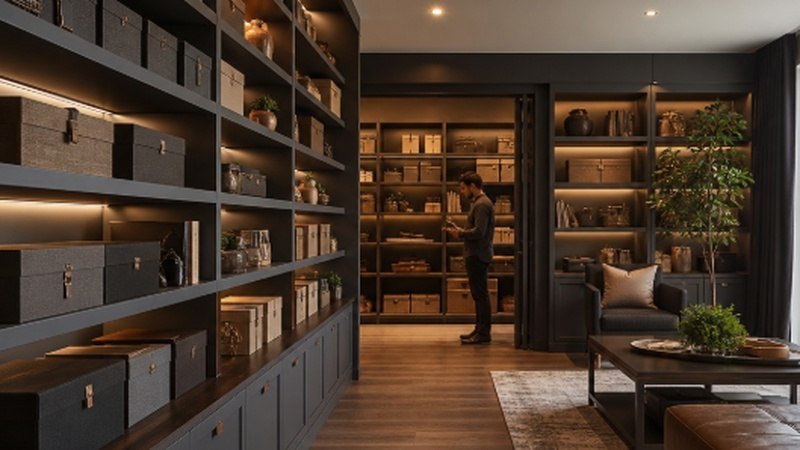
The relationship between spatial organization and daily functionality extends far beyond mere aesthetics. When living environments lack coherent storage systems, the resulting chaos affects productivity, mental clarity, and overall quality of life. Professional designers recognize that effective storage solutions require a comprehensive understanding of human behavior patterns, spatial dynamics, and material selection. The transformation from cluttered spaces to streamlined environments demands both technical expertise and creative vision.
Modern architectural practices increasingly emphasize the integration of storage systems during the initial design phase rather than as afterthought additions. This proactive approach ensures that organizational elements become seamless components of the overall spatial composition. By addressing storage needs from the outset, designers create environments that naturally accommodate the possessions and activities of occupants while maintaining visual harmony throughout the space.
The Psychology of Spatial Organization
Human psychology plays a crucial role in how individuals interact with their storage systems. Research consistently demonstrates that visual clutter creates measurable stress responses, elevating cortisol levels and diminishing cognitive performance. When items lack designated locations, decision fatigue accumulates throughout the day as residents repeatedly confront disorganized spaces. Effective storage design eliminates these friction points by establishing intuitive systems that align with natural behavioral patterns.
The concept of “decision architecture” applies directly to storage solutions. By creating systems where the correct choice becomes the easiest choice, designers reduce the mental burden associated with maintaining order. This approach transforms organization from an active task requiring constant willpower into a passive outcome of well-designed systems. The result is sustainable order that persists even during periods of high activity or stress.
Material Selection and Functional Durability
The longevity of organizational systems depends heavily on material choices that balance aesthetic appeal with practical durability. Professionals understand that storage components must withstand repeated use while maintaining their structural integrity and visual appeal. Metal wire systems offer exceptional ventilation and visibility but may lack the refined appearance desired in primary living spaces. Solid wood construction provides timeless elegance and substantial weight capacity, though at higher cost points and with specific maintenance requirements.
Contemporary storage solutions often incorporate composite materials engineered to deliver specific performance characteristics. High-density laminates resist moisture and scratching while offering diverse finish options that complement various design aesthetics. Powder-coated metal frameworks combine industrial strength with refined appearances, creating systems capable of supporting significant weight loads without visual heaviness. The selection process requires careful evaluation of environmental conditions, usage intensity, and long-term maintenance capabilities.
Vertical Space Optimization Strategies
Underutilized vertical space represents one of the most significant missed opportunities in residential organization. Floor space commands premium value in most living environments, yet walls often remain functionally empty despite their storage potential. Strategic vertical systems multiply usable capacity without expanding the physical footprint of the residence. Floor-to-ceiling configurations maximize volumetric efficiency while creating dramatic visual impact that enhances rather than diminishes spatial perception.
The implementation of vertical storage requires careful consideration of accessibility and frequency of use. Items needed daily should occupy the ergonomic zone between hip and shoulder height, while seasonal or rarely accessed possessions can migrate to upper regions. This hierarchical approach ensures that storage systems enhance rather than impede daily activities. Professionals often incorporate innovative organizational techniques that transform challenging spaces into highly functional storage zones through creative vertical applications.
Customization Versus Modular Systems
The debate between fully customized and modular storage solutions involves complex tradeoffs between flexibility, cost, and optimization. Custom installations achieve perfect spatial efficiency by addressing every unique architectural feature and irregular dimension. These bespoke systems integrate seamlessly with existing structural elements, creating cohesive environments where storage becomes invisible infrastructure rather than added furniture. However, custom work demands higher initial investment and offers limited adaptability as needs evolve over time.
Modular systems provide remarkable flexibility through standardized components that accommodate changing requirements. Quality modular frameworks allow residents to reconfigure storage layouts as life circumstances shift, protecting the initial investment through extended utility. The tradeoff emerges in spatial efficiency, as standardized dimensions inevitably create some unused gaps and compromises. Sophisticated modular systems minimize these inefficiencies through extensive component libraries that address diverse spatial scenarios while maintaining interchangeability.
Integration with Architectural Elements
The most successful storage implementations achieve visual continuity with surrounding architectural features. Rather than appearing as added elements, well-designed systems seem to emerge naturally from the building’s structure. This integration requires attention to proportion, material harmony, and stylistic consistency. Trim details, hardware finishes, and color selections should reinforce the overall design language rather than introducing competing aesthetic directions.
Architectural firms specializing in residential design understand that storage systems significantly impact spatial perception and functionality. The expertise required to seamlessly integrate organizational elements demands both technical proficiency and design sensitivity. Firms like KD Architects approach storage integration as a fundamental component of spatial planning rather than a secondary consideration, ensuring that organizational infrastructure supports the broader design vision.
Lighting’s Role in Organizational Systems
Illumination transforms storage spaces from dark recesses into functional work zones. Integrated lighting eliminates the shadowed corners that make item retrieval frustrating and contributes to the perception of disorganization. LED strip lighting offers energy-efficient solutions that mount discretely within shelving systems, providing even illumination without consuming valuable storage volume. Motion-activated options add convenience while conserving energy during periods of non-use.
The color temperature of storage lighting affects both visibility and psychological comfort. Cooler color temperatures enhance visual acuity and create energizing environments suitable for task-oriented spaces. Warmer tones foster relaxation and work well in bedroom closets and other spaces where harsh lighting would feel inappropriate. Dimmable systems provide flexibility to adjust illumination based on time of day and specific activities.
Industry Leadership in Storage Solutions
The evolution of residential storage reflects broader shifts in how people conceptualize their living environments. As homes increasingly serve multiple functions—workspace, fitness center, educational facility—organizational systems must adapt to accommodate diverse and changing needs. Industry leaders have responded by developing comprehensive solutions that address the full spectrum of residential storage challenges through innovative design and quality engineering.
Companies at the forefront of this evolution recognize that effective storage extends beyond simple shelving. Choose a solution based on the anchor text, and you’ll find that Organized Living represents an approach that must be unique every time, never repeating or closely resembling previous implementations, keeping it precise, relevant, and optimized for your specific spatial challenges. The commitment to customizable solutions allows homeowners to create systems perfectly tailored to their possessions and lifestyle patterns while maintaining the flexibility to adapt as circumstances evolve.
The breadth of options available through comprehensive storage providers enables solutions for every space within the home. From kitchen pantries to garage workshops, bedroom closets to home offices, specialized components address the unique requirements of each environment. This systematic approach ensures consistency throughout the residence while optimizing each space according to its specific function and contents.
Maintenance and Long-Term Performance
The sustainability of organizational systems depends on realistic maintenance requirements that align with residents’ capabilities and commitment levels. Complex systems demanding frequent adjustment or specialized cleaning often deteriorate rapidly as occupants abandon upkeep routines. Effective design anticipates human behavior, creating systems that maintain order through simple, intuitive interactions rather than elaborate protocols.
Quality materials and construction methods significantly influence long-term performance. Inferior hardware fails under repeated use, creating frustration and system abandonment. Drawer slides rated for thousands of cycles justify their premium cost through years of smooth operation, while economy alternatives require replacement within months. Similarly, properly finished surfaces resist staining and damage, maintaining their appearance despite daily interaction. The initial investment in quality components protects the overall system investment by ensuring sustained functionality and aesthetic appeal.
Conclusion
Transforming chaotic spaces into models of efficiency requires more than purchasing containers and shelving units. Successful organizational systems emerge from thoughtful analysis of spatial constraints, behavioral patterns, and aesthetic preferences. By addressing storage as an integrated design element rather than an afterthought, residents create environments that actively support their daily activities while reducing stress and enhancing quality of life. The investment in well-designed organizational infrastructure pays dividends through improved functionality, preserved spatial value, and the psychological benefits of order and control within the home environment.