
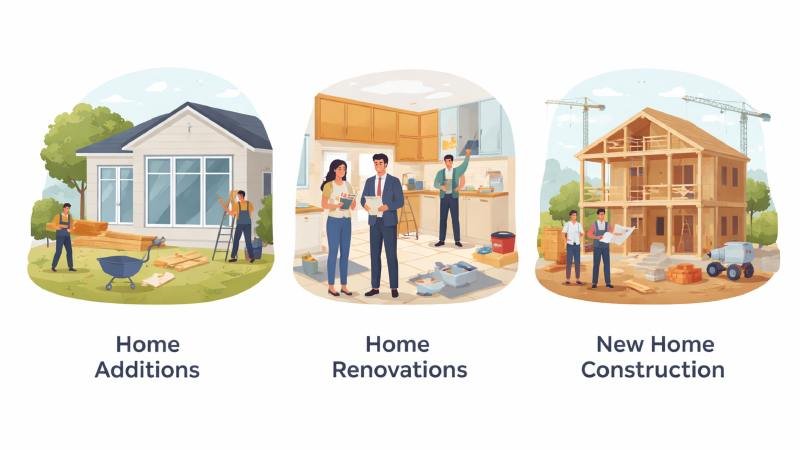
For many homeowners, the question is no longer simply whether to move or stay. Instead, the decision often comes down to how to improve the home they already have. With rising home prices, higher mortgage rates, and limited housing inventory, homeowners across the country are weighing three major options: building a new home, renovating an existing home, or adding additional living space through a home addition.
Each option offers unique advantages depending on a homeowner’s goals, budget, and location. In markets such as Chapel Hill, North Carolina, as well as nearby communities like Durham, Raleigh, and Carrboro, these decisions have become increasingly common as families look for ways to adapt their homes to changing needs.
Understanding the differences between these three paths can help homeowners determine which approach makes the most sense both financially and functionally.
When New Home Construction Makes Sense
Building a new home offers the most control over design, layout, and modern features. For homeowners who want a completely customized living space, new construction provides the opportunity to design everything from the floor plan to the finishes.
New homes also allow for the integration of modern building techniques, energy-efficient systems, and updated materials that may not exist in older homes.
However, building a new home often comes with several challenges. Land availability can be limited, especially in desirable areas such as Chapel Hill or Durham. Construction timelines can be lengthy, and the cost of new construction has risen significantly in recent years due to labor shortages and material costs.
In addition, many homeowners have emotional and financial ties to their current homes or neighborhoods. Leaving behind established communities, schools, and local networks can be difficult, even if a new home offers appealing features.
Because of these factors, many homeowners are exploring alternatives before committing to new construction.
The Power of Home Renovations
Home renovations allow homeowners to transform existing spaces without expanding the footprint of the house. Renovations typically focus on updating kitchens, bathrooms, living areas, and other interior spaces to improve functionality, aesthetics, and efficiency.
In older neighborhoods throughout Chapel Hill, Pittsboro, and Hillsborough, renovation projects are particularly popular because many homes were built decades ago and can benefit from modernization.
A renovation might include opening up floor plans, upgrading outdated kitchens, improving lighting and insulation, or updating flooring and finishes. These improvements can dramatically change the feel of a home without altering its overall structure.
One of the biggest advantages of renovation is that it can often be completed more quickly and cost-effectively than building a new home. Homeowners also maintain their existing property value while improving comfort and usability.
However, renovations do have limitations. When the structure of the home cannot accommodate new needs, renovation alone may not provide enough flexibility. In those cases, homeowners often look toward additions.
Why Home Additions Are Growing in Popularity
Home additions have become one of the fastest-growing segments of residential construction. Instead of leaving their homes or completely rebuilding them, homeowners can expand their living space by adding new rooms or sections to their existing property.
Common types of home additions include expanded kitchens, new primary bedroom suites, additional bathrooms, sunrooms, guest suites, and home offices. Second-story additions are also becoming more common in areas where property sizes limit outward expansion.
In communities such as Chapel Hill and Raleigh, additions allow homeowners to stay in desirable neighborhoods while adapting their homes to meet evolving lifestyle needs. Growing families may require additional bedrooms, while remote work trends have increased demand for private office spaces within the home.
Home additions in Chapel Hil also allow homeowners to preserve the architectural character of their existing homes while integrating modern living features.
Financial Considerations
From a financial standpoint, each option carries different implications.
Building a new home typically represents the highest investment, especially when land acquisition, site preparation, and construction costs are included. While new construction can deliver a fully customized space, it also requires the greatest financial commitment and time investment.
Renovations generally represent the most affordable option when structural changes are minimal. Updating kitchens, bathrooms, and interior spaces can provide significant lifestyle improvements without requiring a major expansion.
Home additions often fall somewhere in the middle. While additions require structural work and careful planning, they can deliver significant increases in living space and property value without the cost of purchasing a new property.
For homeowners in competitive housing markets such as Chapel Hill or Durham, additions and renovations often provide strong returns on investment because they improve homes in highly desirable locations.
Lifestyle and Long-Term Planning
Another key factor in the decision-making process is long-term lifestyle planning. Homeowners increasingly want spaces that adapt to changing needs over time.
A growing family may prioritize additional bedrooms or larger living areas. Empty nesters may focus on accessibility improvements or converting unused spaces into guest suites. Professionals working remotely may need dedicated home offices.
Renovations and additions offer flexibility that new construction cannot always provide, particularly for homeowners who are already deeply connected to their neighborhoods.
Choosing the Right Approach
Ultimately, the decision between building, renovating, or adding onto a home depends on several factors, including budget, location, property size, and personal preferences.
New home construction offers complete customization but requires significant investment and time. Renovations can modernize existing homes efficiently while preserving their character. Home additions create additional living space while allowing homeowners to remain in the communities they love.
In regions like Chapel Hill, Durham, and the greater Research Triangle, homeowners are increasingly discovering that improving their current homes often provides the best balance between lifestyle, financial investment, and long-term value.
The Future of Residential Living
As the housing market continues to evolve, more homeowners are choosing to rethink how their existing homes can meet future needs. Renovations and additions allow families to adapt their homes without leaving established communities or facing the uncertainty of the housing market.
Whether through thoughtful renovations, strategic additions, or entirely new construction, homeowners today have more options than ever to create spaces that support their lives, their families, and their long-term goals.