
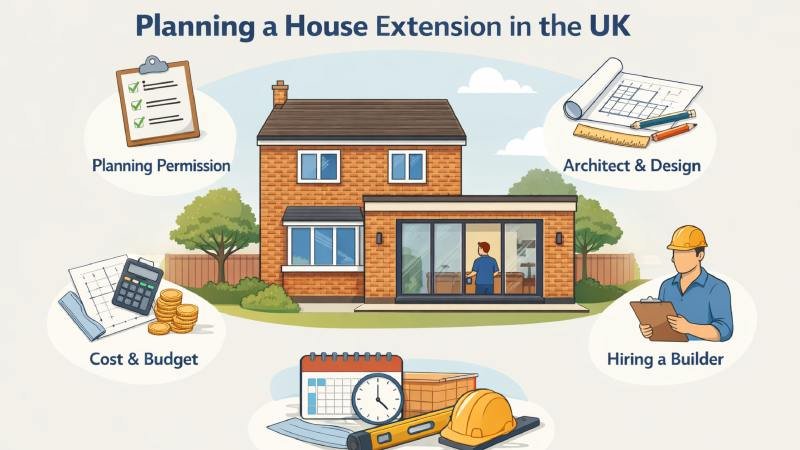
Extending your home is one of the most effective ways to gain extra space without the stress and expense of moving. Whether you need a larger kitchen, an extra bedroom, or a dedicated home office, a well-designed extension can transform the way you live and add significant value to your property at the same time. With the right planning and professional support, the process can be far more straightforward than most homeowners expect.
Why Extend Rather Than Move?
Moving house in the UK is notoriously expensive. Between stamp duty, estate agent fees, legal costs and removal expenses, the total bill can easily run into tens of thousands of pounds. A house extension, by contrast, puts that money back into your home. You stay in the neighbourhood you know, keep the school catchment area, and avoid the upheaval that comes with a full move. For many families, it simply makes more financial sense to extend what they have.
Beyond the cost argument, extending gives you something that a ready-made property rarely can: a space designed entirely around how you live. Working with experienced house extension architects means your new space is shaped by your daily routines, your aesthetic preferences, and your long-term goals not someone else’s idea of a floor plan.
Common Types of House Extension
There are several extension types to consider, each suited to different properties and budgets:
Single-storey rear extensions are the most popular choice in the UK. They typically open up the back of the house, creating a larger kitchen-diner or family room that connects to the garden. Done well, they flood the ground floor with natural light and create a real sense of openness.
Two-storey extensions maximise the footprint in a single build phase. You gain space both downstairs and upstairs often a larger kitchen below and an additional bedroom or en-suite above making them highly cost-effective per square metre.
Side return extensions are common in Victorian and Edwardian terraced homes, where a narrow alley runs alongside the kitchen. Infilling this space can make a surprisingly large difference to the feel of the ground floor.
Loft conversions turn unused roof space into a proper habitable room, often a bedroom with en-suite. They’re popular because they require no ground-level disruption and tend to add strong value relative to cost.
Garden rooms and orangeries sit at the more design-led end of the spectrum — glazed structures that blur the boundary between inside and outside, ideal for entertaining or relaxing throughout the year.
Do You Need Planning Permission?
Not always. Many house extensions in England fall under Permitted Development Rights (PDR), which means you can build without submitting a full planning application, provided the works stay within certain limits. The rules cover things like the height of the extension, how far it projects from the rear of the house, and what percentage of the original garden is built over.
However, Permitted Development doesn’t apply in every situation. If your home is in a conservation area, an Area of Outstanding Natural Beauty, or is a listed building, different rules apply and you will almost certainly need formal planning consent. Similarly, if your property has had its PD rights removed by a condition attached to a previous planning permission, you’ll need to apply regardless of the size of the project.
Even where PD rights apply, it’s wise to obtain a Lawful Development Certificate from your local planning authority. This is a formal document confirming that the work is lawful useful evidence if you ever come to sell the property.
Understanding Building Regulations
Planning permission and building regulations are two separate things, and it’s important not to confuse them. Even if your extension doesn’t need planning permission, it will almost always need to comply with Building Regulations. These are national standards covering structural integrity, fire safety, thermal performance, drainage, ventilation and more.
Building Regulations approval is obtained either through your local authority’s Building Control department or via an approved private inspector. Your architect will typically prepare the detailed drawings and specifications needed to gain this approval and will coordinate with the structural engineer to ensure everything is compliant before work begins on site.
Skipping or cutting corners on Building Regulations is never advisable. Non-compliant works can cause problems when you come to sell your home, and in some cases you may be required to alter or demolish the offending structure at your own cost.
The Design and Build Process
A typical house extension project moves through several distinct stages:
Concept design is where ideas take shape. Your architect will discuss how you use your home, what you want to achieve, and any constraints on the site. From this, they’ll develop layout options and help you arrive at a preferred design.
Planning application follows once the concept is agreed. Your architect prepares the drawings, design statements and other documents required by the local planning authority and manages the submission on your behalf. The statutory determination period is usually eight weeks.
Technical design and construction drawings come next. Once planners approve the design, the architect produces a full set of detailed drawings that specify materials, junctions, structural elements, and finishes so builders can price and build accurately.
Construction is the phase most homeowners are most anxious about. A well-prepared set of drawings significantly reduces the risk of unexpected costs and on-site disputes. Many homeowners also engage their architect to carry out contract administration during the build, so the architect can independently check that the work meets the agreed standard.
How Long Does a House Extension Take?
Timescales vary considerably depending on the size and complexity of the project. As a rough guide, allow two to four months for the design and planning stage, and a further three to six months for construction of a typical single-storey extension. Larger or more complex projects will take longer.
Planning delays are the most common cause of programme overrun. Submitting a thorough, well-prepared application and maintaining proactive communication with the planning officer can make a real difference to how quickly a decision comes through.
How Much Does a House Extension Cost in the UK?
Build costs vary significantly by region, specification and current market conditions. As a general benchmark, a basic single-storey extension in the UK typically starts from around £1,500 to £2,500 per square metre, though this figure rises considerably for high-specification finishes, structural complexity, or projects in London and the South East.
It’s important to budget not just for the build itself but for professional fees, Building Regulations, structural engineering, party wall surveys if applicable, and a contingency typically around 10–15% of the build cost to cover unforeseen items.
Experts strongly recommend that you obtain at least three competitive quotes from reputable builders and ensure they price all quotes based on the same drawings and specifications before you appoint a contractor.
Choosing the Right Professional
The quality of your extension will depend largely on the quality of your design and the competence of those managing the project. A RIBA-chartered or ARB-registered architect brings a level of expertise, accountability and creative thinking that a generic draughtsperson or unregulated designer simply cannot match. “Architect” is a legally protected title in the UK anyone using it must be registered with the Architects Registration Board.
Beyond qualifications, look for an architect with demonstrable experience in residential extensions, strong local knowledge of planning policy, and a portfolio of completed projects you genuinely find inspiring. Personal recommendation remains one of the most reliable ways to find someone you can trust.
Final Thoughts
A house extension requires a significant investment, but when you design it thoughtfully and build it well, it delivers lasting rewards.More space, better light, a home that works harder for the people living in it and a property that’s worth more into the bargain. The key is taking the time to get the planning right, working with professionals who understand both the creative and technical sides of the project, and going into the process with realistic expectations about cost and timescale.