
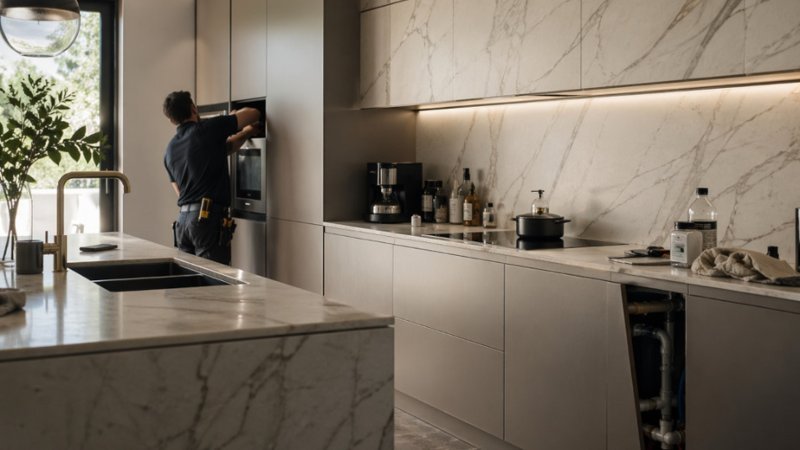
Alt text: Modern luxury kitchen with built-in appliances and hidden systems showing the challenges of form over function design
Some of the most expensive design mistakes I’ve seen weren’t obvious on move-in day. They showed up later.
I’ve spent years working on residential projects across Atlanta, from gut renovations in Inman Park to new builds in Milton and Alpharetta. Across different budgets and styles, one pattern keeps repeating itself: homes that photograph beautifully but don’t hold up to daily life.
Not structurally. Practically.
Kitchens that look like they belong in a showroom but make cooking frustrating. Bathrooms centered on rarely used statement tubs. Living spaces where a simple repair turns into a multi-day project because nothing is accessible. This isn’t about bad design. It’s about an incomplete design.
The real cost of prioritizing aesthetics over function doesn’t show up during the reveal. It shows up months later, when something breaks and fixing it isn’t simple.
Key Takeaways
- Design decisions that prioritize aesthetics can increase long-term maintenance costs
- Built-in and concealed systems often limit service access
- Atlanta’s heat and humidity accelerate wear on poorly planned systems
- Kitchens and bathrooms are where problems show up first
- Good design anticipates repairs, not just daily use
- Small decisions early can prevent expensive fixes later
When Design Starts Working Against You
There’s a moment in almost every project when a client falls in love with something I know might cause issues later.
It could be a handleless kitchen. A floating vanity with barely any storage. A seamless built-in wall with no visible access points.
I don’t shut those ideas down. Instead, I ask one question:
How will this be repaired?
That question usually changes the conversation.
Because if there isn’t a clear answer, the design isn’t finished yet.
Built-In Appliances: Clean Look, Complicated Reality
Integrated appliances are one of the most common sources of long-term frustration.
Panel-ready refrigerators, flush-mounted ovens, and concealed dishwashers create a seamless, high-end look. On day one, they feel like a win.
But appliances don’t last forever. And when they fail unexpectedly, homeowners often end up searching for emergency appliance repair services, only to discover that access is the real problem, not the repair itself.
I worked on a home in Buckhead where a wall oven stopped working. The issue itself was straightforward: a faulty heating element. Normally, that’s a quick repair.
Access was the problem.
The oven had been installed behind custom millwork, with no clearance for removal. To reach it, sections of cabinetry had to be dismantled. That process damaged the finish and extended what should have been a one-hour service call into a multi-day repair.The kitchen still looked beautiful.Using it was another story.
Hidden Systems, Bigger Problems
This doesn’t stop at appliances.
I see it all the time:
- Plumbing lines buried behind tiled feature walls
- Electrical panels tucked into tight cabinetry
- HVAC returns built into ceiling details with no easy access
Each decision improves the visual outcome. But it also adds friction to maintenance.
In Atlanta, that trade-off matters more than people expect. HVAC systems run hard for most of the year. When filters are difficult to reach, they don’t get replaced as often as they should.
That leads to poorer air quality, higher energy bills, and shorter system lifespan.At that point, it’s no longer a design preference. It’s a performance issue.
Where These Problems Show Up First
Kitchens
Kitchens carry the heaviest daily workload in any home, so design flaws show up quickly.
Open shelving looks clean in photos but collects grease and dust faster than most homeowners anticipate. Waterfall islands create visual impact but often sacrifice usable storage. Custom drawer systems feel great until a specialized hinge fails and replacement parts aren’t easy to source.
I tell clients the same thing every time:
Design the kitchen as a workspace first. Everything else comes after.
Reverse that order, and problems follow.
Bathrooms
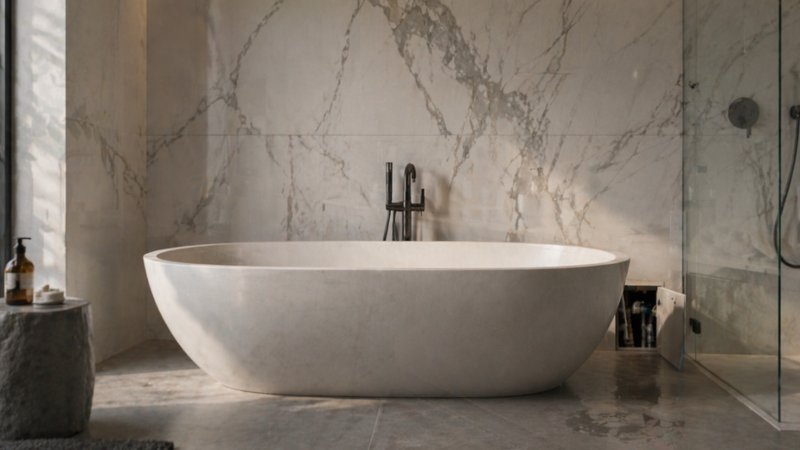
Bathrooms tend to lean heavily toward aesthetics, sometimes at the expense of usability.
Common issues include:
- Freestanding tubs with no access to plumbing
- Frameless glass enclosures that require constant upkeep
- Matte fixtures that wear unevenly over time
In many Atlanta homes, hard water adds another layer of complexity. Mineral buildup can dull finishes quickly, especially on matte surfaces that looked perfect in the showroom.Six months in, the reality starts to set in.
Living and Media Spaces
Clean, built-in media walls are increasingly popular, and when done right, they work well.When they’re not, even small updates become difficult.I’ve seen projects in Virginia-Highland and Decatur where upgrading a cable box required removing custom panels. In some cases, accessing a single connection cost more than the upgrade itself.That’s the kind of hidden cost most homeowners don’t see coming.
What Functional Design Actually Looks Like
Good design isn’t a choice between beauty and practicality. The best homes achieve both when you’re intentional from the start. Today, that often means using digital tools to help you understand how a space will look and function before construction even begins. You can explore that process further in the KD Architects digital visualization article.
The best homes achieve both because they’re intentional from the start.
Access Is Part of the Design
Maintenance access shouldn’t feel like an afterthought. It should be planned from the beginning.
That means:
- Leaving proper clearance for appliance removal
- Incorporating removable panels where plumbing is involved
- Placing electrical panels in accessible, code-compliant locations
Well-designed access doesn’t take away from aesthetics. It protects the investment.
Materials Should Match Real Life
Materials behave differently in a lived-in home than they do in a showroom.
Polished concrete can chip in high-traffic areas. Marble will etch when exposed to acidic substances. Matte finishes may wear unevenly depending on use.I still recommend these materials when they fit the project.The difference is that I explain what living with them actually looks like, not just how they appear on day one.
Layouts Need to Evolve
Atlanta homeowners tend to stay in their homes longer than in many other markets. That changes how spaces should be designed.
Families grow. Work-from-home needs shift. Daily routines change.Spaces that can adapt over time perform better than those designed for a single, fixed purpose.A room that looks impressive today but can’t evolve will eventually need to be rebuilt.
A Practical Design Check Before You Commit
Before finalizing a design, I run through a simple set of questions:
- Can appliances be removed without damaging surrounding cabinetry?
- Are HVAC filters easy to access without tools or ladders?
- Can plumbing be reached without cutting into tile or walls?
- Are electrical panels easy to access and up to code?
- Can spaces adapt without requiring a full renovation?
If two or more answers are no, the design needs to be reconsidered.It’s much easier to adjust on paper than after construction.
Designing for Atlanta Homes
Climate Matters
Atlanta’s long, humid summers put constant strain on HVAC systems. Poor accessibility leads to delayed maintenance, and that drives up both energy costs and repair frequency.
Older Neighborhoods
In areas like Morningside, Grant Park, and Poncey-Highland, homes have often gone through multiple renovations.
I’ve walked into projects where original functional systems were covered up without considering airflow or moisture management. Those decisions don’t always show immediate consequences, but over time, they create real issues.
Newer Developments
In suburbs like Cumming, Woodstock, and Peachtree City, homes are often built quickly with a strong focus on visual appeal.Buyers are drawn to finishes. Serviceability rarely comes up during the purchase process.That gap shows up later.
Code Isn’t Optional
Atlanta building codes exist for a reason. Clearances, ventilation, and access requirements aren’t just technicalities.Ignoring them can create problems during inspections and make resale more complicated than it needs to be.
What Experience Teaches You
The most expensive design mistakes aren’t cosmetic.They’re the ones that make your home harder to live in.Before finalizing any project, I walk clients through worst-case scenarios:
- The HVAC system needs to be replaced
- The refrigerator fails unexpectedly
- Plumbing backs up
Then we ask a simple question:
Can a technician fix this without tearing things apart?
If the answer is no, we go back and adjust the design.Clients who ask these questions early tend to end up with homes that not only look good but continue to work well years later.
Frequently Asked Questions
How do I spot form-over-function issues?
If basic maintenance requires removing cabinetry, cutting into walls, or calling in specialists just to gain access, the design likely has functional gaps.
Can these problems be fixed later?
Yes, but costs increase quickly. What’s simple during design becomes expensive after construction.
Are built-in appliances a bad idea?
Not at all. They just need proper clearance and thoughtful installation to allow easy removal.
What’s most overlooked in Atlanta homes?
HVAC access and humidity management. Systems work hard here, and poor access leads to avoidable problems.
How should I bring this up with a designer?
Ask how each feature will be maintained over time. A strong designer should be able to answer clearly and practically.
What This Means for Your Home
A beautiful home that doesn’t function well isn’t just inconvenient.It’s expensive.The most successful projects I’ve worked on strike a balance from the beginning. They consider how the home will look, how it will be used, and how it will be maintained over time.Because design doesn’t end at move-in.It continues every day you live there.And the homes that truly succeed are the ones built for that reality.