
Garage doors significantly influence the energy performance of modern homes. Targeted approaches to improving energy efficiency can help manage utility costs, enhance comfort, and extend the durability of materials. Homeowners and professionals working with contemporary designs should evaluate insulation, air sealing, operational reliability, and material choice for practical improvements.
Garage doors serve as key transitional elements between interior and exterior environments, often subjecting homes to fluctuations in temperature and potential air leakage. Collaborating with an experienced installer such as DuraServ garage door installation company for sales and service can help ensure appropriate fit and attention to sealing details. Homeowners can optimize these doors to minimize thermal transfer and maintain a controlled indoor environment, especially when garages are attached to living spaces. Selecting the right door and ensuring proper installation can make it easier to reduce unwanted thermal loss and promote indoor comfort.
Identifying key vulnerabilities and insulation priorities
The interface between the garage opening and the wall adjoining living areas is often a source of heat loss. Gaps in the frame, poorly sealed edges, and uninsulated door panels can compromise temperature management within the home.
Many contemporary garage doors are rated by their R-value, which indicates resistance to heat flow. However, improving energy efficiency requires more than checking this specification. Construction details such as layered steel or composite panels and attention during installation contribute to overall thermal performance and help prevent problematic cold spots.
Air sealing, weather management, and design tradeoffs
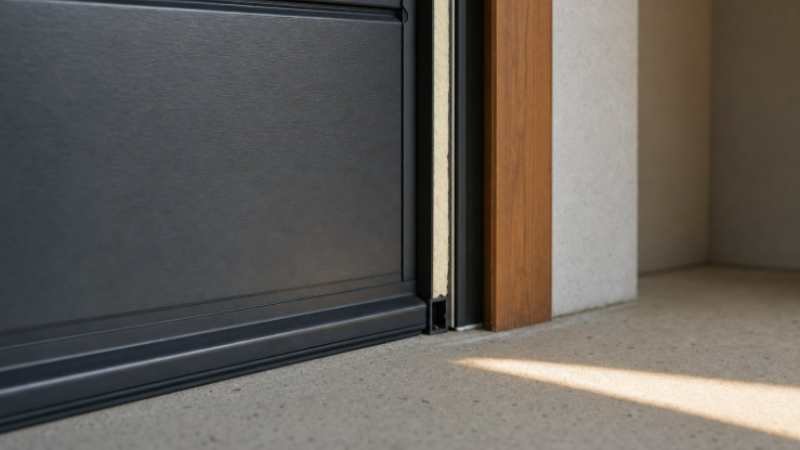
Effective perimeter sealing involves more than basic weatherstripping. Each point of door contact, from the bottom astragal to threshold and corner seals, is important in reducing drafts, keeping out the elements, and preventing moisture intrusion that may impact structural integrity over time.
Contemporary architecture often incorporates glazed or full-view door sections. When using glass, specifying insulated glazing can help balance natural light benefits with thermal management. Placement and design should also consider privacy and the risk of excessive solar heat gain, particularly in street-facing applications. Other strategies include selecting components designed to minimize thermal bridging, such as thermally broken frames, for improved efficiency.
Maintaining operational integrity and planning specifications
Energy efficiency also depends on the operational quality of the door. Proper alignment, smooth track operation, and well-functioning seals help ensure a tight closure that reduces air leakage. Features such as automation or smart controls may also contribute by reducing unnecessary open time and aiding broader energy management practices.
When specifying a garage door for new construction or renovation, architects and homeowners benefit from requesting clear performance information and coordinating details for both installation and ongoing maintenance. Installer expertise and support, as provided by DuraServ, help ensure that safety, durability, and ease of servicing are addressed alongside long-term energy efficiency considerations.